

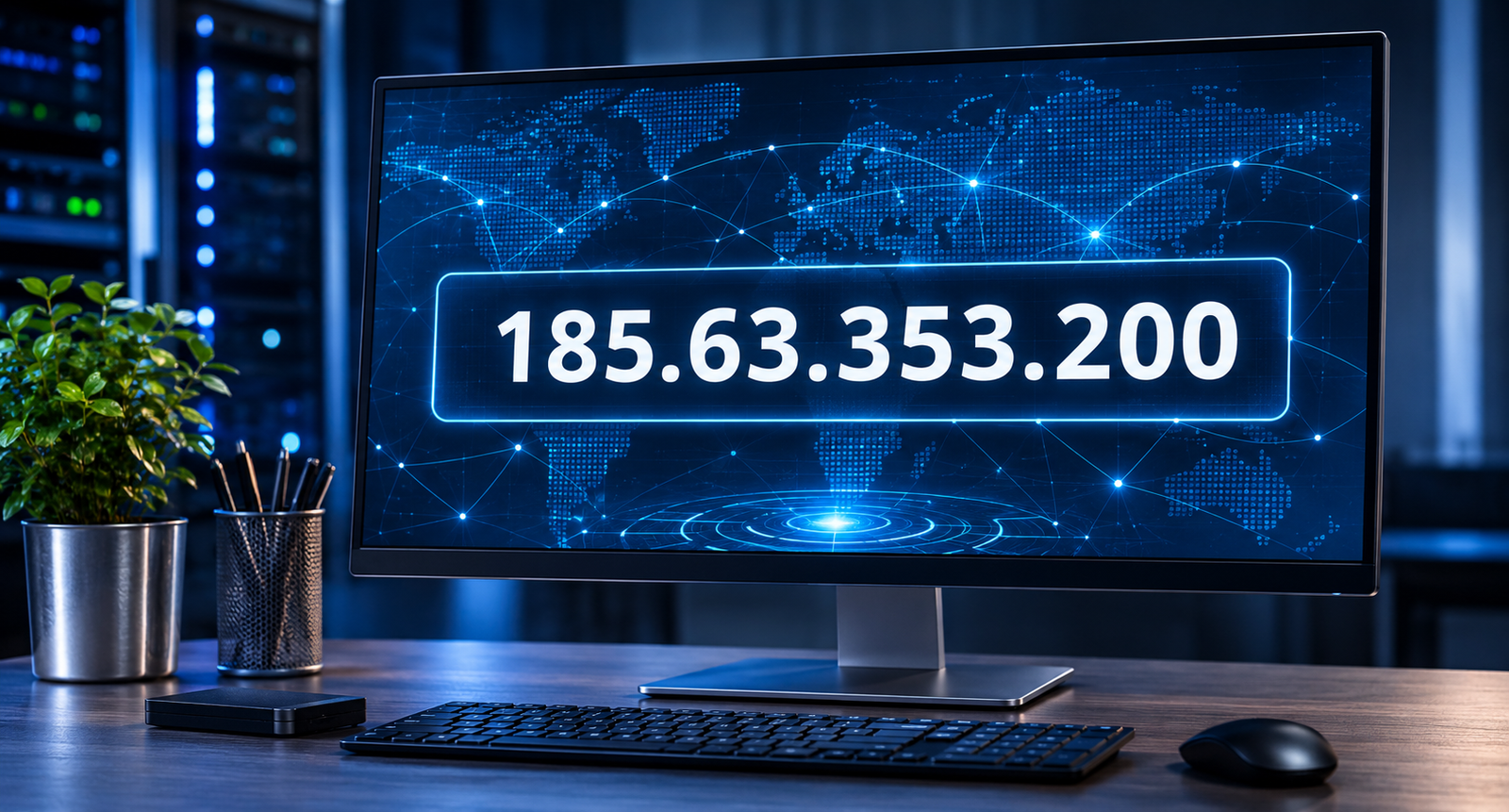
what 185.63.353.200 means, why it is not a valid IPv4 address, and what its unusual numerical format could indicate. 185.63.353.200 is a numerical sequence that resembles a traditional IPv4 address, but there is an important detail that makes it different from a standard internet address. Although it contains four groups of numbers separated by periods, the third group, 353, exceeds the permitted IPv4 numerical range. This means the complete sequence does not qualify as a valid IPv4 address under standard networking rules. For someone encountering this number in a website report, server log, technical document, or online discussion, understanding this distinction is important. It helps explain why the address may not work in network tools, why location searches may return no reliable information, and why its appearance alone does not reveal anything about a particular person, computer, or internet connection.
What Is 185.63.353.200?
185.63.353.200 looks like an IPv4 address because it follows the familiar four-part numerical structure used by internet-connected devices. IPv4 addresses are commonly written as four numerical sections separated by periods, with each section containing a value between 0 and 255. However, this particular sequence does not follow that complete requirement because its third section contains 353. That number is outside the accepted range, making the entire sequence invalid as a conventional IPv4 address. It is therefore more accurate to describe 185.63.353.200 as an incorrectly formatted or potentially mistyped IP-like number rather than an active internet address. Without additional information about where it appeared, its original purpose cannot be established with certainty.
Understanding the Structure of 185.63.353.200
To understand why this numerical sequence is unusual, it helps to examine how IPv4 addresses are organized. A standard IPv4 address contains 32 bits divided into four groups of eight bits each. These groups are called octets, and each one is represented by a decimal number ranging from 0 to 255. This structure allows billions of possible address combinations and provides a standard way for devices to identify network destinations. In the case of 185.63.353.200, the four groups appear in the expected order, but the third group does not meet the numerical requirement. The problem is not the number of sections or the periods between them. It is the value of one particular section.
Breaking Down the Four Numerical Sections
The sequence contains four separate groups: 185, 63, 353, and 200. The first group, 185, falls within the accepted range. The second group, 63, is also within the limit, while the third group, 353, exceeds the maximum allowed value. The final group, 200, is within the permitted range as well. This makes the third section the specific formatting problem. Even though three sections contain acceptable values, all four sections must satisfy the IPv4 rules for the complete address to be considered valid. One incorrect section is enough to make the entire sequence unacceptable as a standard IPv4 address.
Why Is 185.63.353.200 Not a Valid IPv4 Address?
The main reason 185.63.353.200 is invalid is that IPv4 uses an eight-bit structure for each numerical section. Eight bits can represent 256 different values, starting at zero and ending at 255. A number such as 353 cannot fit within that range. This is a basic requirement of the IPv4 addressing system, not an optional formatting preference. Network applications, address validators, and other networking tools generally expect each octet to follow this rule. When a value exceeds the limit, the sequence cannot be treated as a properly formatted dotted-decimal IPv4 address. Consequently, attempting to use the exact number as a normal destination address may result in a validation error or an unsuccessful network operation.
The Maximum Value of an IPv4 Octet
Every IPv4 octet has a maximum decimal value of 255. This limit comes directly from the eight-bit binary structure used by the protocol. The smallest possible value is 0, and the largest is 255. For example, 192.168.1.1 is a familiar example of a correctly formatted IPv4 address because every section falls within the permitted range. Other addresses can contain different values, but the same numerical restriction always applies. Since 353 is greater than 255, it cannot be represented as a single standard IPv4 octet. This simple mathematical rule explains the formatting issue without requiring complicated networking knowledge.
What Could 185.63.353.200 Represent?
When people encounter an unusual numerical sequence online, their first question is often whether it belongs to a website, server, computer, or another internet-connected system. In this situation, the available information is limited because the sequence is not a valid IPv4 address. Several explanations could account for its appearance, but none should be treated as confirmed without examining the original source. It might be a typing mistake, a copied value containing an error, a placeholder used in an example, or a malformed entry produced by a software system. It could also be part of a larger identifier that only resembles an IP address. The surrounding context is therefore much more useful than the number alone when trying to understand why it appears somewhere.
A Possible Typing or Data Entry Mistake
One straightforward explanation is a typing error. Numerical addresses are sometimes copied manually between documents, websites, applications, and technical reports. A single incorrect digit can change a valid address into an invalid sequence. Someone might have intended to enter a different number but accidentally typed 353 instead of another value. However, there is no reliable way to identify the intended number from the sequence alone. Changing the third section to an arbitrary value would only create another number, not prove what the original address was supposed to be. Checking the original document or asking the person who supplied the information is a more dependable approach.
An Incorrectly Generated Example
Another possibility is that the sequence was created as a sample or demonstration value. Technical articles, educational materials, and software documentation sometimes use numerical examples to explain how IP addresses work. A poorly checked example may accidentally include a number outside the accepted range. In other situations, an application may generate sample-looking values without validating whether they follow the correct networking format. If 185.63.353.200 appears in an article, tutorial, test document, or demonstration interface, it may simply be an illustrative sequence rather than an address intended for actual network communication.
A Malformed Software or Database Entry
Software systems often store and process large amounts of numerical information. If an application does not properly validate user input, incorrectly formatted values can enter a database or appear in reports. A field intended for an IP address might contain a manually entered string that looks correct at first glance but does not follow the required format. Data conversion problems, incomplete validation, or programming mistakes can also contribute to unusual entries. This does not automatically mean that the software has been compromised or that a security incident has occurred. It simply means the information should be checked before it is used for networking, reporting, or technical analysis.
Can 185.63.353.200 Be Traced to a Location?
185.63.353.200 cannot be reliably associated with a geographical location as written because it fails the basic IPv4 formatting requirement. IP geolocation services generally use valid IP addresses to estimate information such as a country, region, city, or internet service provider. They rely on address allocation records and other datasets to produce those estimates. Since the third numerical section exceeds the permitted IPv4 range, a conventional IP geolocation lookup cannot establish a trustworthy location for this exact sequence. Some websites may display an error, return no result, or handle the input inconsistently. Any geographical information presented without a valid underlying address should be treated cautiously.
Does It Identify a Country or City?
No country or city can be reliably identified from this exact sequence. Although some valid IPv4 address ranges are associated with particular geographical regions or network providers, those associations depend on correctly formatted and allocated addresses. The first two numerical sections alone are not enough to establish the location of a complete address. The third section prevents the sequence from meeting the normal IPv4 requirements. Therefore, assigning it to a particular country, city, company, or internet provider would involve unsupported assumptions.
Is 185.63.353.200 a Private or Public IP Address?
The distinction between private and public IP addresses is another important part of understanding internet networking. Private IPv4 addresses are reserved for use inside local networks, such as home Wi-Fi connections, office networks, and internal computer systems. Public IP addresses are used for communication across the wider internet and are generally assigned through internet service providers or network administrators. However, before deciding whether an address belongs to either category, its basic format must be valid. Because 185.63.353.200 contains an invalid octet, it cannot be reliably classified as a standard private or public IPv4 address in its current form.
Understanding Private IPv4 Address Ranges
Private IPv4 addresses are defined within three reserved ranges. These include 10.0.0.0 through 10.255.255.255, 172.16.0.0 through 172.31.255.255, and 192.168.0.0 through 192.168.255.255. These addresses are commonly used by routers, laptops, smartphones, printers, and other devices within local networks. They are not directly routed across the public internet in the same way as public addresses. The sequence 185.63.353.200 does not become a valid private address simply because it resembles an IPv4 number. Its incorrect third section remains the primary issue.
Could 185.63.353.200 Be a Security Threat?
Seeing an unfamiliar numerical sequence does not automatically indicate a cybersecurity problem. People regularly encounter unusual numbers in browser messages, website analytics, firewall reports, application logs, and network monitoring tools. Some entries may be legitimate technical information, while others may result from formatting mistakes or incomplete records. In this case, the sequence itself does not establish that someone attempted unauthorized access, scanned a network, or targeted a computer. It is important to separate a formatting problem from an actual security event. If the number appears in a suspicious activity report, the surrounding log entries and verified network information are more useful than making assumptions based on the number alone.
What Should You Check if It Appears in Server Logs?
If 185.63.353.200 appears in a server log, begin by examining the complete entry rather than focusing on the numerical sequence in isolation. Check the timestamp, application name, request details, and other information recorded alongside it. Determine whether the value came from a user-submitted field, an application-generated message, or a network-related record. You can also check whether the logging system has a validation process that rejects malformed IPv4 addresses. If the entry is associated with an actual security alert, review the surrounding events and consult the relevant system documentation. This approach helps avoid confusing an ordinary data problem with a genuine security concern.
How to Check Whether an IP Address Is Valid
Checking an IPv4 address is relatively simple once you understand its basic structure. A standard address should contain four decimal sections separated by periods, and each section must have a value between 0 and 255. You can check the format manually or use a reputable IP address validation tool. A validator examines whether the supplied text follows the expected structure and numerical limits. For 185.63.353.200, the result should identify the third section as invalid because its value exceeds 255. This kind of check is useful before entering an address into a router configuration, network application, server setting, or troubleshooting tool.
Manual IPv4 Address Validation
Manual validation involves checking the four sections individually. First, confirm that the sequence contains four numerical groups separated by three periods. Next, examine each group to make sure it contains a permitted decimal value. None of the sections should be negative or greater than 255. In the case of 185.63.353.200, the first, second, and fourth sections meet the numerical range requirement, while the third does not. This means the sequence fails the validation process. Manual checking is often enough to identify simple formatting mistakes without installing additional software or using complicated networking commands.
Using an IP Address Validator
An online IP validator can make the process easier, especially when checking multiple addresses. These tools typically examine the structure of an entered value and determine whether it follows IPv4 or IPv6 formatting rules. A good validator should clearly explain why an address is rejected instead of simply displaying an unexplained error. However, users should be careful when submitting sensitive information to unfamiliar websites. For ordinary public-looking examples, a reputable validation tool can be useful, but private network details and confidential technical records should be handled according to the organization’s security policies.
IPv4 and IPv6: Understanding the Difference
IPv4 and IPv6 are two different versions of the Internet Protocol used to identify devices and route data across networks. IPv4 is the older and widely recognized version, using 32-bit addresses represented by four decimal sections. IPv6 was developed to provide a much larger address space as the number of internet-connected devices increased. It uses 128-bit addresses, which are generally written as groups of hexadecimal characters separated by colons. Both protocols support internet communication, but their addressing formats are different. The sequence 185.63.353.200 resembles IPv4 notation, not the standard notation used for an IPv6 address.
Why IPv4 Uses Four Numerical Sections
The four-section structure makes IPv4 addresses relatively easy to read and recognize. Each section represents eight bits, and the four sections together create a 32-bit address. This arrangement provides approximately 4.3 billion possible address combinations before accounting for reserved and special-purpose ranges. Although the format is straightforward, its numerical restrictions must be followed carefully. Every section has a maximum value of 255, which is why the number 353 causes the sequence to fail validation. Understanding this structure makes it easier to recognize malformed addresses when working with network information.
Why IPv6 Was Introduced
The growth of smartphones, computers, connected appliances, servers, and other internet-enabled devices increased demand for unique network addresses. IPv4 has a limited address space, so IPv6 was introduced with a much larger number of possible addresses. Its 128-bit structure provides an enormous address range that supports the continuing expansion of internet connectivity. IPv6 also includes improvements to certain aspects of network configuration and communication. However, the introduction of IPv6 does not change the rules for IPv4. A number written in traditional four-part IPv4 format must still follow the original octet requirements to be considered valid.
Common Misunderstandings About 185.63.353.200
Unfamiliar numerical sequences often create confusion because they look more meaningful than they actually are. Someone might assume that every four-part number separated by periods must be a working IP address. Others may believe that an unfamiliar sequence automatically belongs to a website, server, or individual. Neither assumption is reliable. The correct way to understand this example is to examine its structure first and then consider the context in which it appears. Its format resembles IPv4 notation, but the invalid third section prevents it from being treated as a standard IPv4 address.
It Does Not Automatically Identify a Person
An IP address, even when valid, does not normally reveal a person’s name or complete identity by itself. Network addresses can be shared, reassigned, or used through routers, corporate networks, mobile connections, and privacy services. Additional records and appropriate legal processes may be required to connect network activity with a subscriber or account. In this particular case, the issue is even more basic because the supplied sequence is not a valid IPv4 address. There is no sound reason to associate it with a specific individual based on the number alone.
It Does Not Automatically Belong to a Website
A valid IP address can sometimes be associated with a website’s hosting infrastructure, but that relationship requires accurate network information. Websites may use shared hosting, cloud infrastructure, content delivery networks, or several different servers. An unusual number that resembles an IP address does not prove that it belongs to any particular website. Since 185.63.353.200 fails IPv4 validation, it should not be presented as the confirmed server address of a company, platform, or online service.
What Is the Best Way to Understand 185.63.353.200?
The most reliable approach is to treat 185.63.353.200 as an invalid IPv4-style numerical sequence until its original source can be verified. Start by checking where it appeared and whether the surrounding information provides additional context. If it came from a technical document, compare it with the original source. If it appeared in a website report or application, examine the relevant record and determine whether the value was entered manually or generated automatically. Avoid changing the number simply to make it look valid, because doing so could introduce another error. Accurate interpretation depends on verified information rather than guessing what an unfamiliar sequence might have been intended to mean.
Conclusion
185.63.353.200 is an unusual numerical sequence that resembles a traditional IPv4 address but does not meet the required formatting rules. Its third section contains 353, which exceeds the maximum permitted IPv4 octet value of 255. This makes the complete sequence invalid as a standard IPv4 address. It may have appeared because of a typing mistake, incorrect data entry, a placeholder, or another formatting issue, but its exact origin cannot be established without additional context. It also cannot reliably identify a geographical location, internet service provider, website, server, or individual. The most useful takeaway is simple: check the original source, verify the numerical format, and avoid drawing conclusions that the available information cannot support.
Frequently Asked Questions
1. What is 185.63.353.200?
185.63.353.200 is a numerical sequence that resembles an IPv4 address but is invalid because its third section exceeds 255.
2. Is 185.63.353.200 a valid IP address?
No. Standard IPv4 addresses require four numerical sections, each ranging from 0 to 255. The value 353 makes this sequence invalid.
3. Where is 185.63.353.200 located?
Its geographical location cannot be reliably determined because it is not a valid IPv4 address.
4. Can 185.63.353.200 identify someone?
No. The sequence does not establish the identity of a person, device, or internet subscriber.
5. Why does 185.63.353.200 look like an IP address?
It follows the familiar four-number structure separated by periods used in IPv4 notation. However, its third numerical section violates the IPv4 range requirement.
Read also: 4503231179 Meaning, Possible Uses, and Number Details

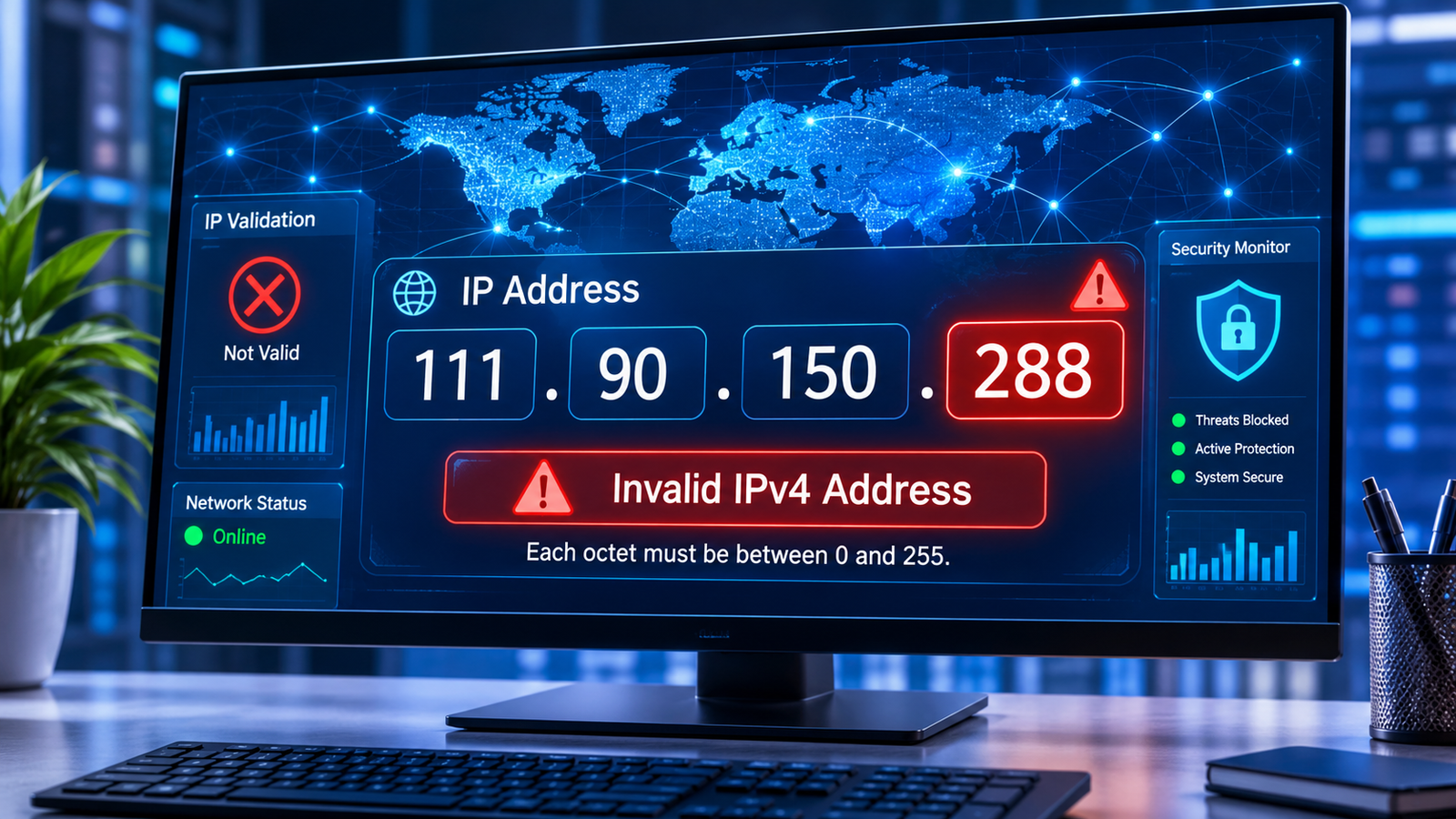



111.90.150.288 Is This a Valid IP Address?
[…] Read also: What Is 185.63.353.200? Understanding This Unusual IP […]